
Doors that stick in their frames, cracks that move upward through brick, and floors that slope toward one corner are common signs of foundation settlement. This happens when the soil beneath your home can no longer support the weight of the structure, causing the foundation to sink or shift.
Push piers are one of the most common permanent solutions for foundation settlement. They are steel tubes driven deep below your foundation footing until they reach a stable soil layer or bedrock. The weight of your home is then transferred onto the piers, helping stabilize the foundation. Once that load transfers, hydraulic jacks can raise a settled foundation back toward its original position.
ECP push piers are a type of patented foundation repair product that also go by micro piles, steel push piers, and resistance piers. The term “resistance piers” describes how they work, since the weight of your home supplies the resistance that drives each one into the ground.
Not sure if push piers are right for your home? Our guide on whether your foundation needs push piers explains the warning signs to look for before choosing a repair solution.
Most foundation problems start with the soil, not with how the house was built. Clay shrinks in dry weather and pulls away from the footing it was poured against. Loose fill compresses under the load of the structure above it. Moving water carries fine particles out from under a slab. Any of these leaves a foundation wall without the support it started with.
A push pier system bypasses that soil completely. Each push pier is driven past the layer that moves with the seasons and seated on load-bearing strata that stay put. It holds the house at its tip rather than gripping the dirt along its sides, so it does not lose strength in a dry summer or a wet spring. That is what gives the repair long-term stability and makes it foundation stabilization rather than a surface patch.
Push pier installation uses portable equipment that fits through a standard gate, so there is no large machine on the lawn and very little vibration through the house. The system installs on the outside or the inside of a foundation wall, which matters when a settling foundation shows up under an interior load-bearing wall.
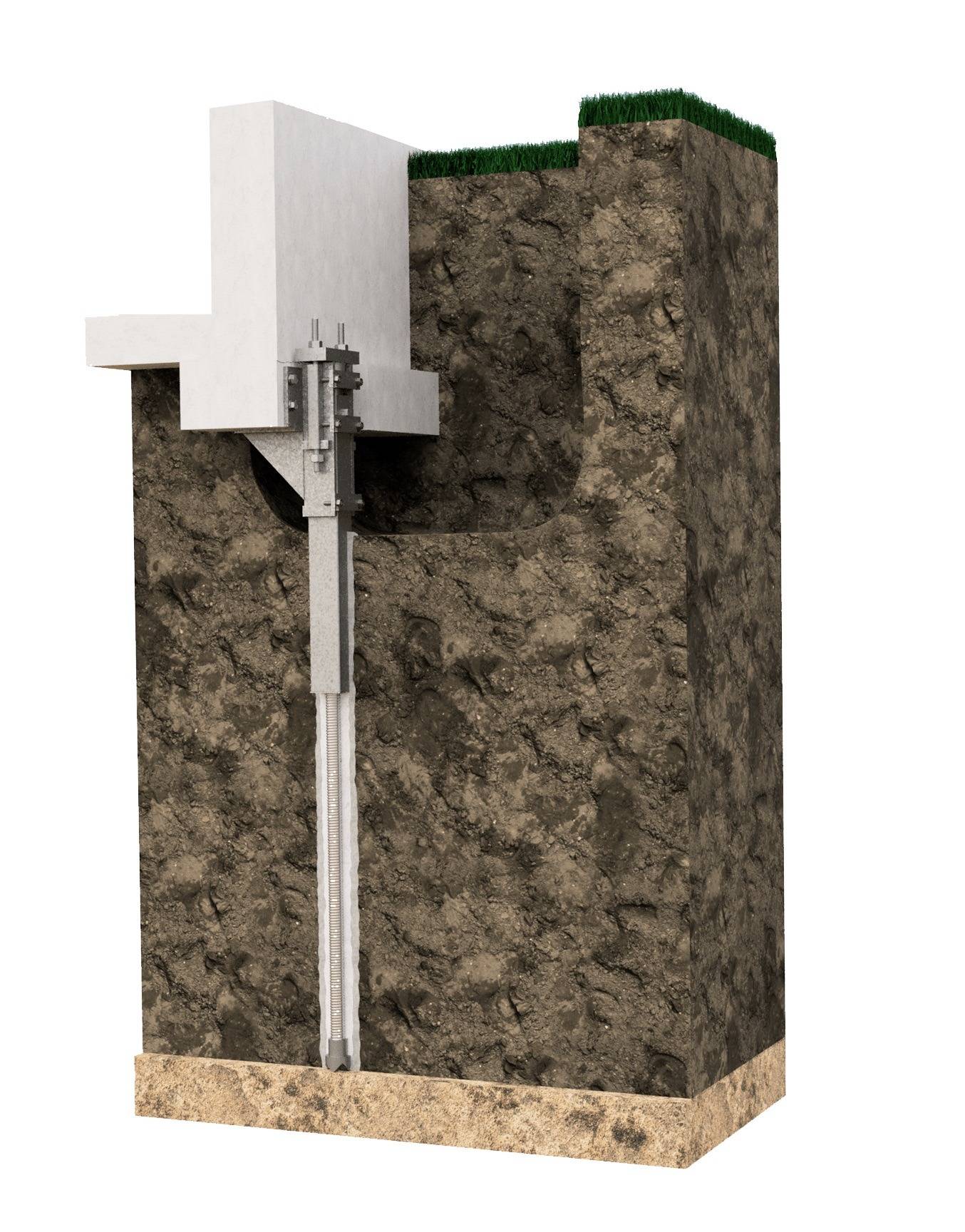
The right foundation pier depends on how much load it carries and what sits below the site. Homes, commercial buildings, and industrial structures pull from the same steel pier line, and the model changes with the load. The ECP steel pier is an end-bearing design, so it holds the structure at the tip and does not depend on skin friction along the shaft. A collar on the lead section opens a path slightly wider than the pipe. An external sleeve stiffens the joint where the pipe passes through weak soil, and that external sleeve is standard on deeper installs. ECP was the first manufacturer to earn ICC-ES code approval under the standard written for push pier systems, and the steel is made in Olathe, Kansas.
| Specification | Detail |
| Capacity | The PPB-350 is rated to 99,000 pounds ultimate, with a recommended working load of 43,000 pounds per placement |
| Lift | 4 inches standard, adjustable beyond that |
| Placement | Installs inside or outside the foundation wall |
| Testing | Field load tested on every install |
| Conditions | A micropier bracket handles cobbles, buried obstructions, and shallow bedrock |
| Warranty | 25-year warranty from Earth Contact Products on the steel |
Our pier contractors size the pier system after an inspection, because the number of piers and the depth to stable soil are things only a site visit can settle.
Push pier installation changes how your house carries its own weight and requires a permit and inspection in most areas, so who you hire matters. Every contractor in the My Foundation Repairs network installs Earth Contact Products push pier systems, a trusted American manufacturer of steel piers, helical anchors, and waterproofing systems.
When you use our Find a Contractor tool, you get:
The steel is rated for the life of the structure, and ECP backs it with a 25-year warranty. Because the load rests on load-bearing strata rather than the soil that caused the problem, the repair does not need to be redone when the weather swings. A pier system installed on a verified bearing layer is a permanent repair.
Often, but not always. Once the piers are in place, hydraulic jacks can raise a settled foundation toward its original position, and 4 inches of lift is common. How much comes back depends on how long the settlement has been happening and how brittle the finishes are. Pushing too far can crack drywall, tile, and plumbing that has adjusted to the new shape.
No. A push pier system relies on the weight of the building to drive it, so lighter structures like porches and decks usually call for a helical pier.Bowing foundation walls are a sideways pressure problem and need wall anchors rather than piers. An inspection sorts out which structural issues you have.
Price comes down to how many foundation piers the house needs, how deep they go to reach bedrock or firm ground, and how hard the access is around the building. Depth is the variable nobody can quote over the phone. Contractors in the network provide a free written estimate after an on-site inspection. Foundation repair cost breaks down the variables, and financing is available through network contractors.
A documented repair with load test records and a transferable warranty gives a buyer something concrete. Unrepaired settlement shows up in every inspection and gets negotiated against you. Keep the paperwork and hand it over at closing.
A helical pier, also called a helical pile, is a steel shaft fitted with helical plates that is rotated into the ground until it reaches the required load-bearing capacity. Unlike a push pier, which uses the weight of an existing structure as resistance during installation, a helical pier is installed with hydraulic torque equipment. This makes helical piers especially useful for lighter structures, including porches, decks, and room additions, as well as new construction, although either system may be appropriate depending on the structure and soil conditions. Contractors in our network can evaluate the site and recommend the appropriate system.