
How Serious is a Horizontal Foundation Crack?
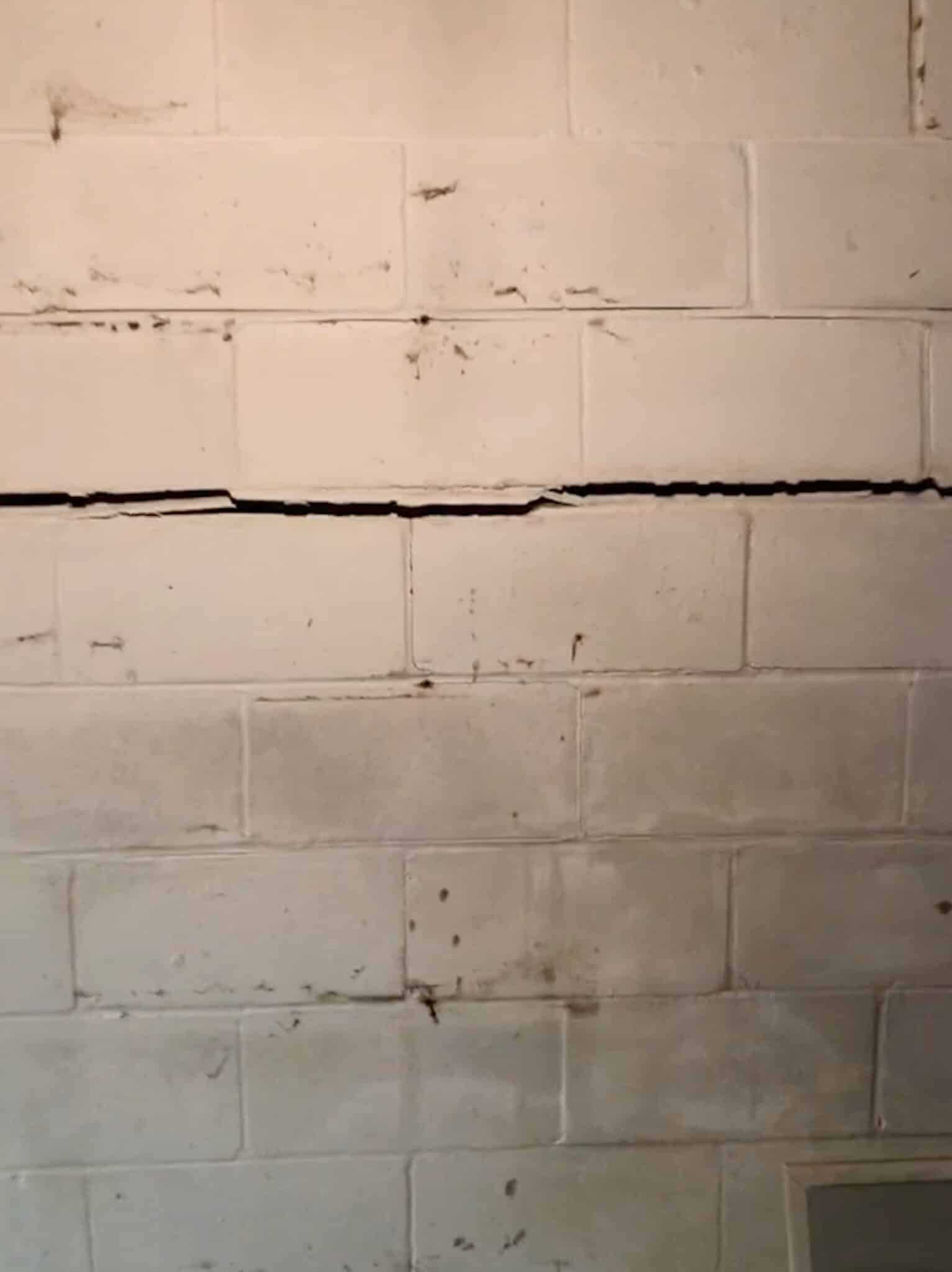
A large horizontal crack running across your basement foundation wall is cause for concern. However, the crack doesn’t mean your foundation is doomed. Plate anchors can repair your wall.
Water Pressure Causes Cracks
 A horizontal crack in your foundation wall puts your home at risk.
Horizontal foundation cracks are signs of serious problems. The cracks are caused by hydrostatic pressure, which is water pressure pushing your foundation walls inward.
Water is a foundation’s biggest nemesis. Wet periods, which can be caused by rainfall, snowmelt, or a high water table, cause the ground to expand.
That expansion exerts pressure on your basement walls, forcing them inward.
Water causes the soil beneath a home to move, resulting in settling, cracks, bowed walls, and other foundation issues.
If there isn’t proper draining around a home, some areas of soil may swell more than others also putting pressure on foundation walls.
Masonry Walls Struggle with Lateral Force
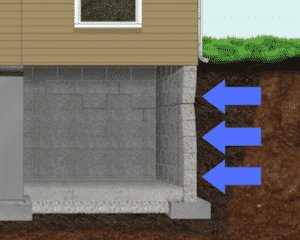 Water pressure pushes inward on your foundation walls, causing horizontal cracks.
Foundation walls made from concrete blocks or other masonry units are very good at handling compressive strength, which is the weight of a house above pushing down on the wall.
Where masonry walls struggle is with lateral loads. Lateral force runs parallel to the ground and perpendicular to the direction of gravitational pull. In other words, the pressure pushing inward on your basement wall is lateral force.
Exert enough lateral force on a foundation wall and the wall will crack, often at the masonry line.
Because foundation walls are load bearing, if the walls crack and lose structural integrity, the entire building can be compromised and in danger of collapse.
Plate Anchors Help Stabilize Foundation Walls
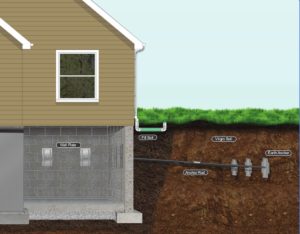 Using torque, plate anchors help stabilize your foundation wall.
To protect your home and family, it is vital that you find a local My Foundation Repairs contractor using the "Find a Contractor" tool. Horizontal foundation cracks are serious problems, but plate anchors from Earth Contact Products will correct the problem.
In a plate anchor wall system, holes are dug in the soil away from the foundation wall. Rods are driven through small holes in the basement wall and connected to exterior anchors installed deep in the soil.
On the interior of the foundation wall, a wall plate is placed and then secured to the rod.
A wall plate is placed on the interior of the foundation wall and then secured to the rod.
Using torque, the wall is then pulled back into place and stabilized.
Frequently Asked Questions About Horizontal Foundation Cracks
What causes horizontal cracks in a foundation wall?
Horizontal cracks are caused by hydrostatic pressure, or water pressure, building up against your foundation wall. Rainfall, snowmelt, or a high water table can cause the surrounding soil to expand, pushing inward on the wall. Poor drainage around the home can make things worse by causing some areas of soil to swell more than others.
Is a horizontal foundation crack serious?
Yes. Foundation walls are built to handle the weight of the house pressing down on them, but they're not as strong against lateral force, pressure pushing in from the side. A horizontal crack means that force has already stressed the wall past its limit. Left unaddressed, it can compromise the wall's structural integrity and put the whole building at risk.
Can a horizontal foundation crack be repaired?
Yes. Plate anchors are a proven solution for horizontal cracks caused by hydrostatic pressure. The system uses anchors installed deep in the soil outside the home, connected by rods through the foundation wall to an interior plate. Applying torque gradually pulls the wall back into place and stabilizes it.
How do plate anchors fix a foundation wall?
Plate anchors work in three parts: an anchor buried deep in the soil away from the home, a rod running through the foundation wall, and a plate on the interior wall face. Once connected, torque is applied to slowly pull the bowed or cracked wall back to its original position.
Why do masonry foundation walls struggle with water pressure?
Concrete block and masonry walls are strong against compressive force, the weight of the home pushing straight down. But they're much weaker against lateral loads, force pushing in from the side. Hydrostatic pressure creates exactly that kind of lateral force, which is why it so often causes cracking along the masonry line.