
How Does a Sump Pump Work? Inside the System
The Short Answer: A sump pump moves water out of your basement or crawl space and sends it a safe distance away from your home's foundation. It sits in a sump pit at the lowest point of the floor, waits for the water level to rise, and then kicks on to push the water through a discharge pipe and out of the house.
The Sump Pump Cycle Explained
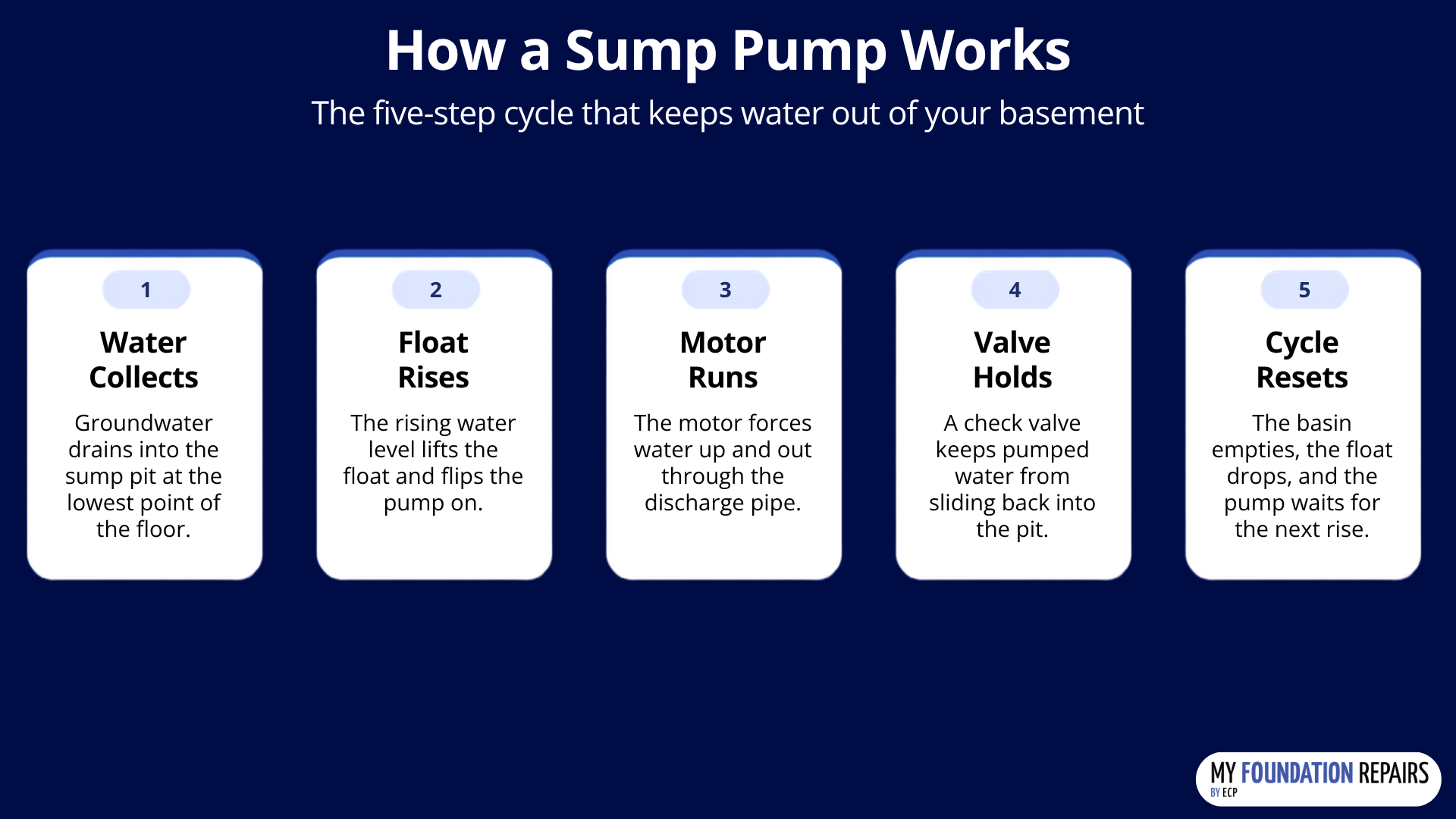
- Water collects in the pit: Groundwater drains into the sump pit at the lowest point of your floor.
- The float switch trips: Once the water reaches a set height, the switch turns the pump on.
- The pump pushes water out: The motor forces water up through a discharge pipe and out to a spot where it drains safely away from the house.
- The check valve holds the line: A valve on the discharge pipe keeps that water from sliding back into the pit once the pump shuts off.
- The cycle resets: The float drops as the pit empties, and the pump waits for the next rise.
Where Does the Discharged Water Go?
Where the discharge lands matters. Most cities require the pipe to empty onto the yard, into a foundation drain, or into a storm drain. Tying a sump pump into the sanitary sewer is illegal in many areas, because the extra flow overloads the system during heavy rain and causes backups in the neighborhood. The EPA lists sump pumps and foundation drains among the improper connections that contribute to sewer overflows.
Why Should You Install a Sump Pump?
A sump pump is the piece of equipment that stands between water outside your home and water damage inside it. Groundwater pushes up against a home's foundation any time the water table rises after heavy rainfall. A sump pump system gives that excess water somewhere to go before it seeps through the floor slab or the wall joints.
Property owners with a finished basement have the most to lose from basement flooding, but crawl space moisture creates its own problems, including wood rot, insect activity, and poor indoor air quality. A working pump in a properly sized sump basin is the difference between a dry floor and thousands of dollars in flood damage.
If your basement has ever felt damp, if you have watched water bead up on the floor after a storm, or if neighbors have dealt with sewer backup during wet weather, a sump pump installation is worth a conversation with a contractor.
Types of Sump Pumps
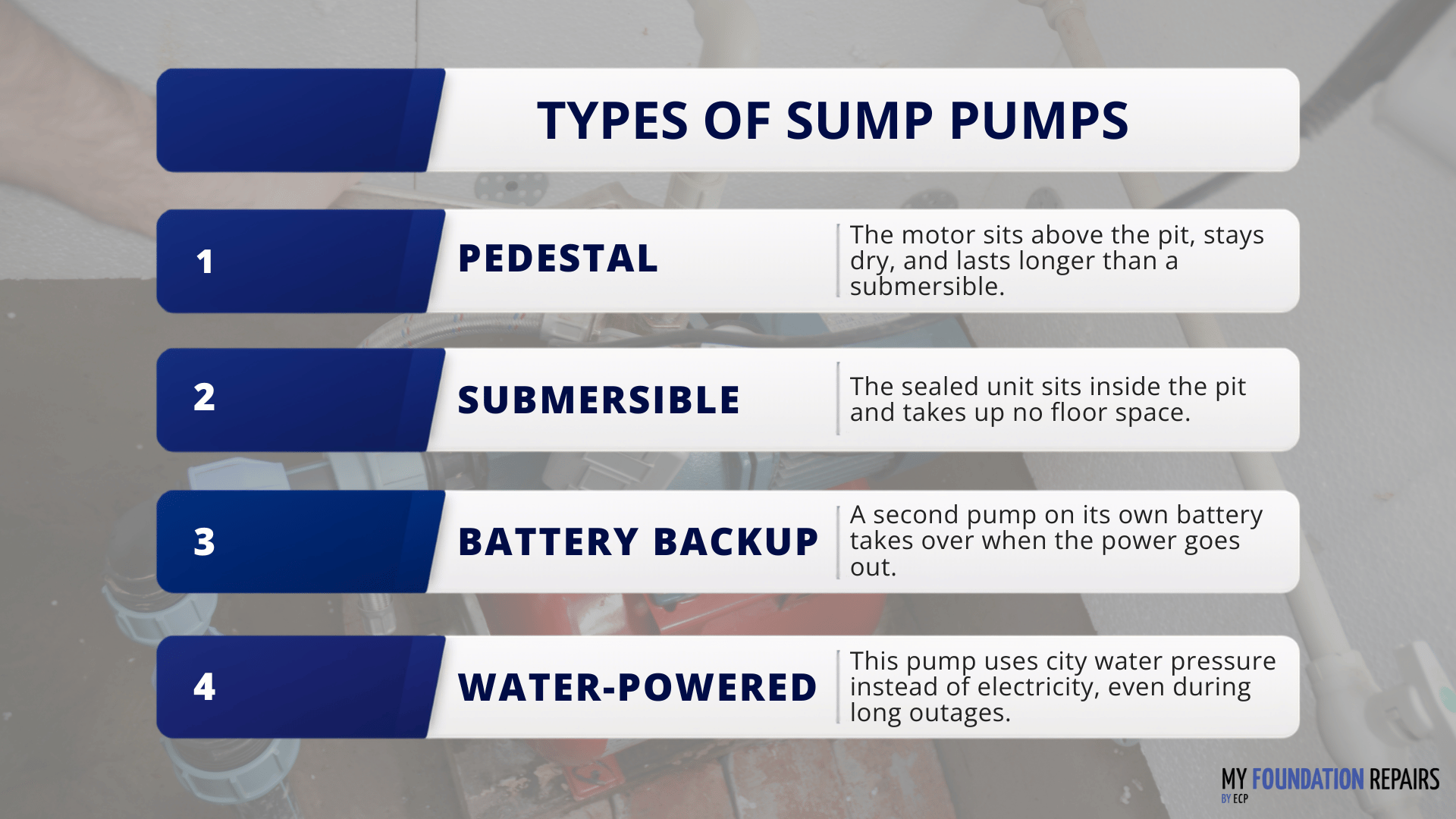
There are four common types of pumps used in basements and crawl spaces. Each one solves a slightly different problem.
Pedestal Sump Pump
A pedestal sump pump keeps its motor on a column that sits above the sump pit. Only the intake at the bottom of the column touches water, and the electric motor stays dry. Pedestal units are easier to service because the motor is out in the open, and they usually last longer than a submersible model because the motor is not exposed to moisture. The trade-offs are noise and appearance, since the motor sits visible above the floor.
Submersible Sump Pump
A submersible sump pump sits inside the sump pit with the entire unit, motor included, sealed against water. It runs quieter than a pedestal because the pit and lid muffle the motor, and it takes up no floor space. Most primary setups in a finished basement use a submersible pump today. Certified contractors in the My Foundation Repairs network install sump pump systems using ECP components nationwide.
Battery Backup Sump Pump
A primary pump handles day-to-day water. A battery backup pump takes over when the primary cannot. Power tends to go out during the same storms that dump the most water on your roof and yard, which makes this the answer to the most common cause of a flooded basement: a working pump with no electricity to run it.
Water-Powered Sump Pump
A water-powered sump pump uses municipal water pressure to move water out of the pit instead of a battery or an electric motor. It works only if your home is on city water with strong pressure. The upside is that a water-powered sump pump will run for as long as pressure holds, even during a long power outage. The downside is that it moves less water per minute than an electric unit, and it uses potable water to do it, so most contractors treat it as a secondary layer of protection rather than the main line of defense.
Parts of a Complete Sump Pump System
A functional sump pump system has four parts working together:
- A primary sump pump sized for the volume of water your pit sees during a typical storm.
- A backup pump on a separate power source, usually a battery, in case the primary fails or loses electricity.
- A sump pump alarm that alerts you when water rises above the normal shutoff point or when the pump has stopped working.
- A sealed sump basin with a lid that keeps debris, radon gas, and humidity out of the basement air.
- The sealed sump pit is the piece homeowners often overlook. An open pit lets moisture evaporate into the basement, which raises humidity and encourages mold. A sealed lid also prevents small pets and children from falling in, and it protects the float switch from getting jammed by debris.
Homes lose power in the same storms that produce the most groundwater, which is why a backup pump matters. A sump pump alarm gives you a chance to act before water reaches the top of the pit and spills onto the floor. Some alarms send a signal to your phone, which is useful if you travel or manage rental property.
As a rule, two independent pumps in one pit are far less likely to fail together than a single pump on its own, and adding a sump pump alarm closes the last gap.
Protect Your Basement from Flooding with a Sump Pump
A pump alone does not waterproof a basement. It works alongside the rest of your drainage. A foundation drain, also called a footing drain, collects water from around the perimeter of the slab and channels it toward the pit. Inside the basement, a French drain does the same job at floor level.
Without a drain feeding the pit, the pump has nothing to do until water is already inside. Without a pump at the end of the drain, the drain has nowhere to send what it collects. The two are designed to work as one, which is why they are installed as a single interior basement drainage system.
Flood preparation goes beyond the pump. Ready.gov covers the steps every homeowner should take before storm season, including insurance review and emergency planning. Pair those habits with a well-designed sump pump system, a working foundation drain, and a battery backup, and your basement or crawl space has real protection.
Ready to replace an old unit, install a new pump, or add a backup to a pit you already have? Use the My Foundation Repairs contractor locator to get matched with a certified waterproofing contractor in your area. The consultation is free and comes with no obligation.
Sump Pump FAQs
Most residential sump pumps run for about seven to ten years before they need replacement. That number depends on how often the pump cycles, the quality of the unit, and whether it sits in a sealed sump basin. A pump that runs constantly during wet weather will wear out faster than one that runs a few times a week. Regular upkeep helps you reach the top of that range, and our sump pump maintenance checklist covers what to check and how often.
A full sump pump installation is best left to a professional. The pump has to be sized for the water your pit actually sees, the discharge line has to run somewhere legal and away from your foundation, and the check valve and any battery backup have to be set up right, or the system fails in the exact storm you needed it for. A contractor can also tell whether the real fix is better drainage, not just a new pump. My Foundation Repairs will match you with a certified contractor for a free, no-obligation consultation.
Yes. A primary pump is only useful when it has power. A power outage during heavy rain is the exact scenario a battery backup system is built for. Even a reliable primary sump pump becomes a failed sump pump the moment the electricity goes out, and that is often when the basement is filling fastest.
In most cities, no. Tying a sump pump into the sanitary sewer is a code violation because the extra water overloads the sanitary sewer system and causes sewer backup problems for other homes. The discharge pipe should empty onto the ground away from your foundation, into a storm drain if allowed locally, or into a dry well.
A sump pump alarm is a small device that sounds an alert when the water level in the pit rises above the shutoff point. It tells you the primary pump can't keep up or has stopped. For any finished basement or unattended property, a sump pump alarm is worth the small added cost. Some models also monitor the check valve and float switch to catch a stuck part before the pit fills.
Cost varies with the type of pump, whether a sump pit already exists, the length of the discharge pipe run, and whether you add a battery backup pump at the same time. The most accurate way to price the job is to have a licensed contractor look at your basement or crawl space. My Foundation Repairs will match a property owner with one at no charge.