
Find a Foundation Repair Contractor in Virginia
A foundation problem won’t fix itself, and Virginia’s clay soil and humid climate can turn a small crack into a bigger repair the longer it waits. We connect you with a licensed, insured foundation repair contractor in your part of Virginia at no cost to you and with no obligation to move forward.
Local Foundation Repair Contractors

- Crawl Space Repair
- Foundation Repair
- Waterproofing

- Bowing Wall Repair
- Crawl Space Repair
- Foundation Repair
- New Construction Piles

- Foundation Repair
- New Construction Piles
Common Foundation Problems in Virginia
Most Virginia homeowners who reach out to us are dealing with settlement, heaving, shifting, or cracking. Settlement and heaving happen when the ground under your house moves down or up and your foundation moves with it. Shifting and cracks show up when the soil pushes on your concrete harder than it can handle, which opens the door to water intrusion, an unstable structure, and even pests. These problems only get worse over time, and catching the early signs keeps your repair smaller. Here's what to watch for in your home or business.
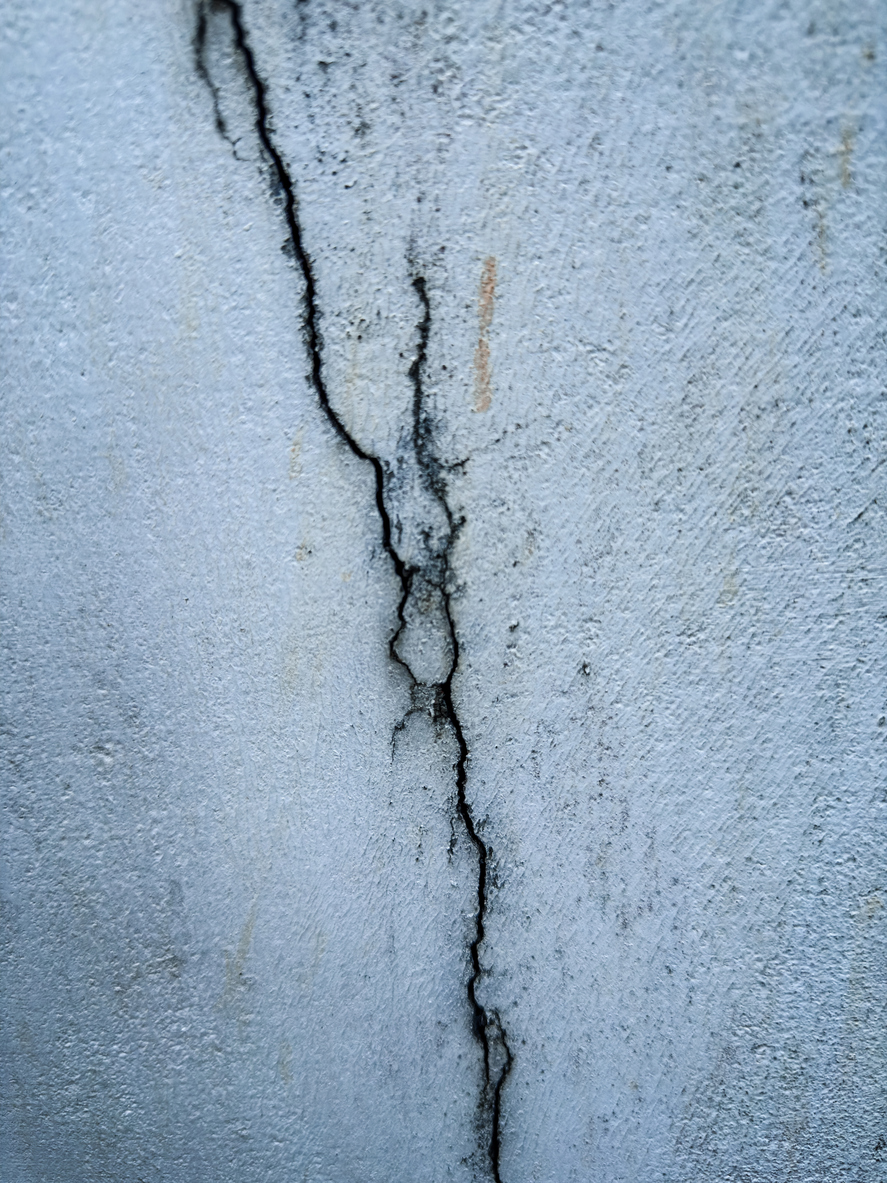
Cracks in a slab or basement floor turn up in plenty of Virginia homes, and not all of them signal trouble. Thin hairline cracks usually come from concrete curing as it dries. A crack that is wide, still growing, or joined by other warning signs is the kind that points to movement in the ground below.
Shifting clay, heavy rain, and tree roots can all crack a floor. When the cause sits underneath, the crack keeps opening until the movement is addressed. One of our contractors can tell you whether your floor crack is cosmetic or structural and handle the crack repair before it turns into wider structural damage.
If your floors slope, dip, or feel bouncy, the support underneath has moved. Many Virginia homes sit over a crawl space, and uneven floors there often trace back to sagging beams or posts that have lost their footing. A ball set on the floor rolling to one side, or a gap opening where the wall meets the floor, is a common tell.
The right fix depends on the cause, and our contractors check your footings and supports first, which may call for crawl space repair to shore them up. Left alone, sloping floors keep getting worse and let in the moisture that leads to water damage and mold.
A wall crack is easy to overlook, but the pattern tells the story. A fine hairline crack is usually harmless. A wider crack, especially a stair-step crack climbing through brick or block, often means your foundation is moving.
When cracks like that spread across a wall, get them looked at. One of our contractors can tell you whether your wall needs crack repair, block wall reinforcement, or added support to stop the movement before it grows.
When the ground under your house settles unevenly, it pulls your framing out of square, and your doors and windows are usually where you notice it first. They start to stick, drag, or leave gaps at the top or bottom that were not there before.
One sticky door on a humid Virginia afternoon is normal. Several doors and windows binding at once, together with cracks or sloping floors, points to a foundation issue, and it’s time to schedule an inspection. Catching it early keeps the repair small and the cost lower.
Ceiling cracks have many causes, and foundation movement is one of them. As the soil beneath your home settles, the structure shifts, and that stress travels up the walls and into the ceiling where fresh cracks form.
Some ceiling cracks are purely cosmetic. Others run right where the wall meets the ceiling and warn that your home’s structural integrity is under strain. A ceiling crack that shows up alongside other signs is worth a look from one of our qualified contractors to rule out something bigger.
A basement wall that bows inward or leans is holding back more pressure than it was built to take. The usual cause is hydrostatic pressure, when water-logged soil outside pushes hard enough to crack and bow a foundation wall inward over time.
This is a serious problem that will not correct itself. Our contractors fix bowing walls with helical tiebacks, wall plate anchors, or carbon fiber straps that pull your wall back toward straight and hold it there for good.
A chimney that tips away from the house is often tied to the foundation. When the soil under or beside the chimney settles, the chimney leans, and in bad cases it can separate from the wall or come down.
A leaning chimney should not wait. If a gap is opening between the chimney and the side of your house, schedule an inspection with one of our contractors soon, because the same movement may be affecting the rest of your home.
Causes of Foundation Problems in Virginia
Water Pressure Against Your Foundation
Soil that stays saturated presses against the foundation from every side, and this hydrostatic pressure runs high across Virginia’s Coastal Plain, where the water table sits high and summer storms keep the ground wet. Left unchecked, it cracks walls and bows a basement inward. Our contractors keep it in check with a drainage system or sump pump.
Clay Soil That Shrinks and Swells
Much of Virginia rests on clay soil that swells when it takes on water and shrinks when it dries, and the state’s expansive clays can move a slab or split a foundation wall. Humid summers, droughts, and winter freeze-thaw in the north and west drive the wetting and drying so the soil never stays put.
Soil Erosion Around Your Home
Heavy rain saturates the ground and washes soil out from under the footing, and downspouts that dump water at the base of the wall speed it up. Gutters that carry water away and a yard that slopes away from the foundation keep the soil in place.
Shifting and Settling Soil
As the ground compacts or erodes, it leaves voids your house drops into, cracking the slab and making one side feel like it is sinking. Dry spells do the reverse, shrinking clay until it pulls from the footing and opens new gaps to settle into.
Solutions for Foundation Repair in Virginia
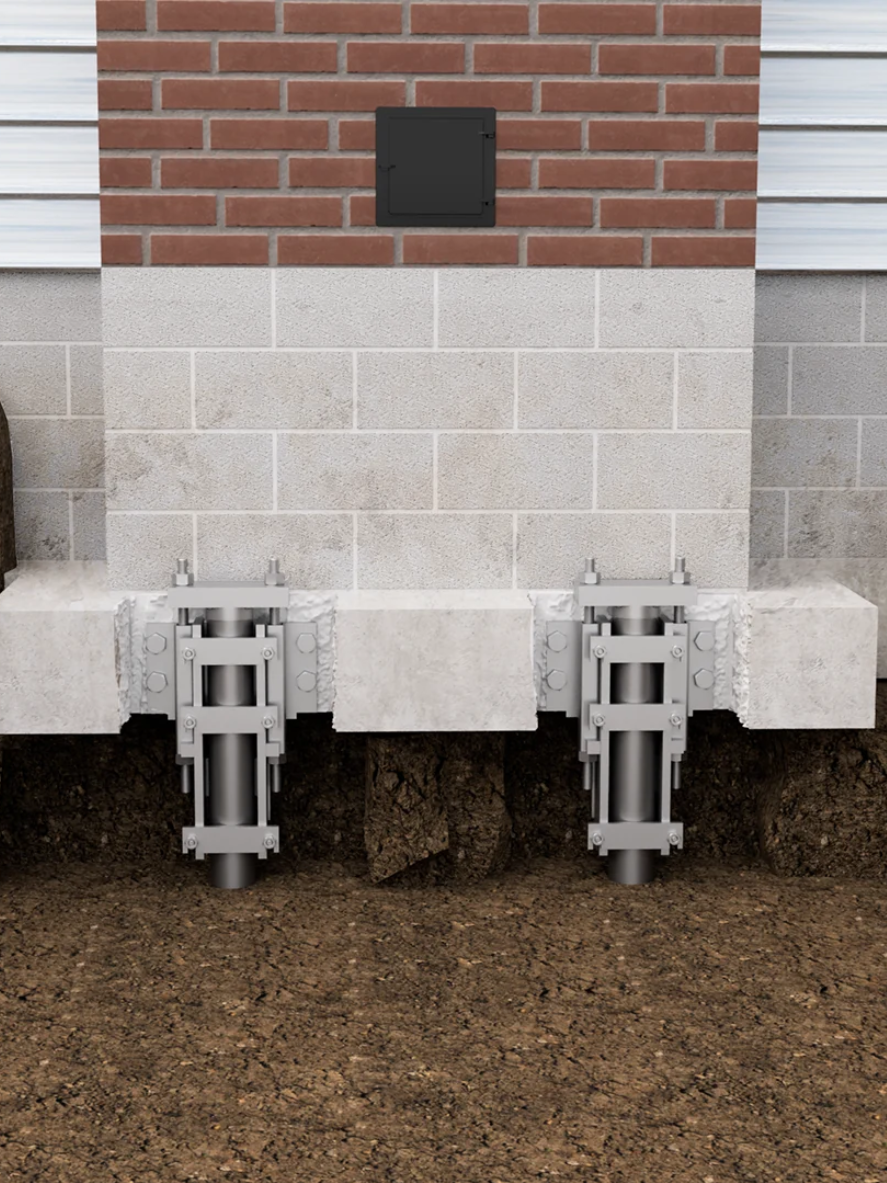
Our Virginia foundation repair contractors rely on a few proven repair solutions, and underpinning is the most common. Underpinning moves your home’s weight onto piers that reach deep enough to hit soil that holds steady year-round. Steel push piers and helical piers both do that job, then raise your house and lock it in place. The difference is how they go in. A steel push pier is pressed straight into the ground, while a helical pier, also called a helical pile, is turned into the ground like a large screw. Your contractor looks at the load, the soil, and how much lift your home needs before choosing one. Because a foundation pier anchors into stable ground, you get a long-term fix instead of a short-term patch. All of these are ECP foundation repair products, built in the USA and load-tested.
A bowing or leaning wall needs a different approach. Plate anchors are set in the soil a short distance from your house and connected to the wall with a steel rod and plate. Your contractor then tightens them in stages to ease the wall back toward straight. Helical tiebacks work the same way, threading into the soil from the wall to pull it back into line. For lighter bowing, carbon fiber straps reinforce the wall with no digging at all. If your driveway, patio, or interior slab has sunk, concrete leveling brings it back to level.
Our contractors will explain why a repair fits your home and stand behind a lasting structural repair before you sign off on any foundation repair service. These structural solutions are built to last, which is why underpinning and wall anchoring are handled by licensed crews and not tackled as a weekend project.
Basement Waterproofing in Virginia
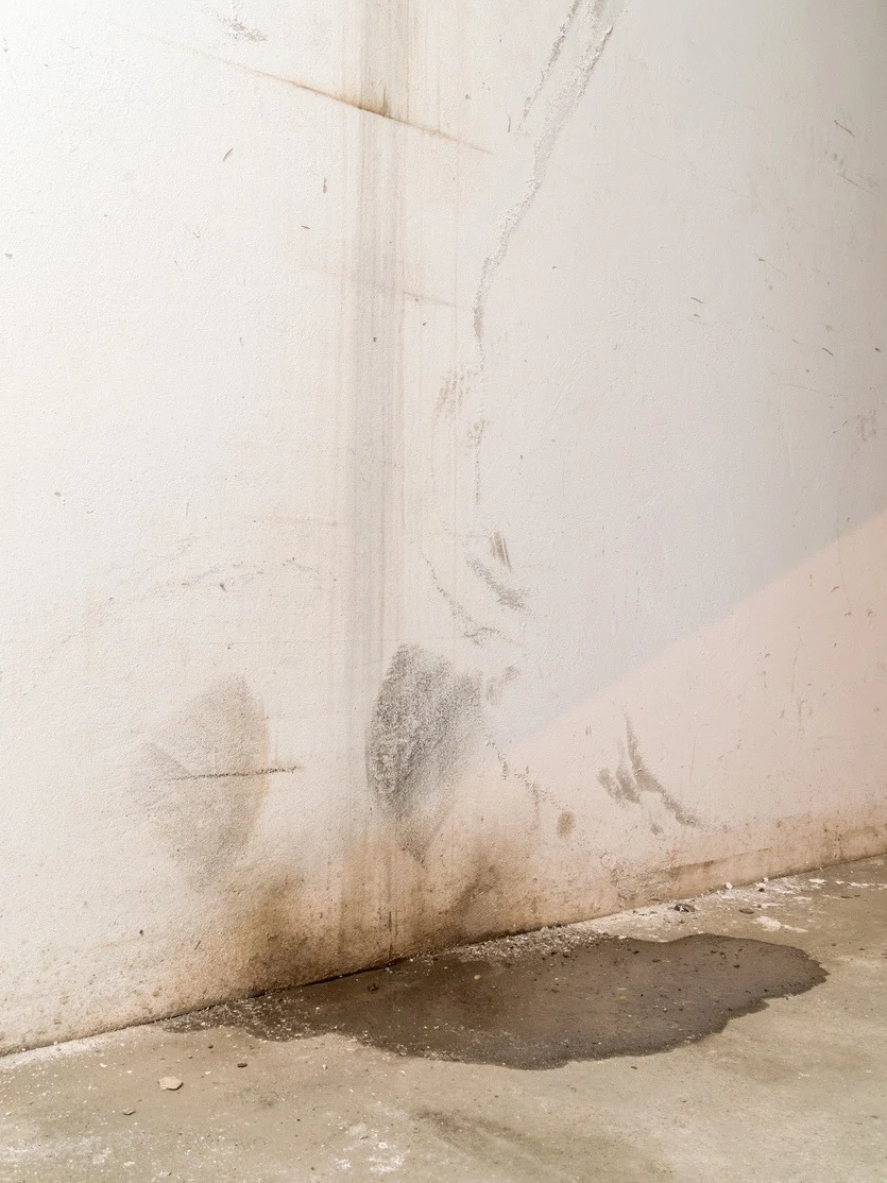
Fixing your foundation and controlling water usually go hand in hand. Water gets into your basement through foundation cracks, wall seams, or right through the concrete. Once it’s in, a damp basement can grow mold, smell musty, rot your framing, and create structural problems the longer it stays wet. Basement waterproofing keeps the water out and the space dry, which protects your home and the air your family breathes.
The best way to waterproof your basement is to let one of our professionals handle it. Our experienced waterproofing contractors find where the water is getting in and install the right system to dry out a wet basement, including interior drainage, sump pump installation, and exterior sealing. Interior drainage collects water at the base of your wall and sends it to a sump pump that pushes it away from your house, and your wet basement finally stays dry. If your home has a crawl space instead of a basement, crawl space encapsulation seals out ground moisture with a heavy vapor barrier. These crawl space solutions keep humidity down through Virginia’s wettest months. The same network we use for foundation repair connects you with a contractor for basement waterproofing and moisture control across Virginia and the surrounding areas.
Enter your zipcode and we’ll connect you with a certified Virginia contractor in your area. Get your free estimate with no obligation to move forward.
Frequently Asked Questions
There’s no flat rate, because the price depends on the repair method, how much damage there is, and how easy the work area is to reach. Sealing a minor crack sits at the low end, and full underpinning for a settled home costs much more. The best way to get a number you can trust is to book a free inspection and let one of our foundation repair contractors assess the problem in person. Getting more than one free estimate also helps you keep your budget clear.
It depends on the crack. A thin, vertical hairline crack is often just curing concrete. A horizontal crack, a stair-step crack through block, or a crack that keeps opening usually means there’s a structural issue. If a crack is spreading or letting water in, have a professional look at it. Our contractors will explain the difference and only recommend a repair when your wall actually needs one.
We don’t recommend taking on foundation repair yourself. Driving piers, pulling a wall back into place, or installing a sump pump takes engineering training, permits, and specialized equipment, and one mistake can make the damage worse or leave your home unsafe. Cleaning your gutters and fixing the grade around your home are fine to do yourself, but leave the structural repair to one of our licensed contractors.
My Foundation Repairs handles most of the vetting for you. Every foundation repair company in our network is licensed and insured, trained on ECP systems, and usually has a long track record with local homeowners. Our coverage runs statewide, which means you get expert foundation repair from a certified crew wherever you live in Virginia. Checking reviews and getting a second opinion is still smart, but our matching tool connects you with a vetted foundation repair service and takes out most of the guesswork.
One of our contractors comes out, checks the cracks and other signs inside and outside your home, gets into your basement or crawl space, and usually takes floor-level and wall-movement readings. Those readings point to the real cause, not just what you see on the surface. Your contractor then walks you through your repair options and pricing. Your foundation inspection and written estimate are free, and you can size up the problem before you spend any money.